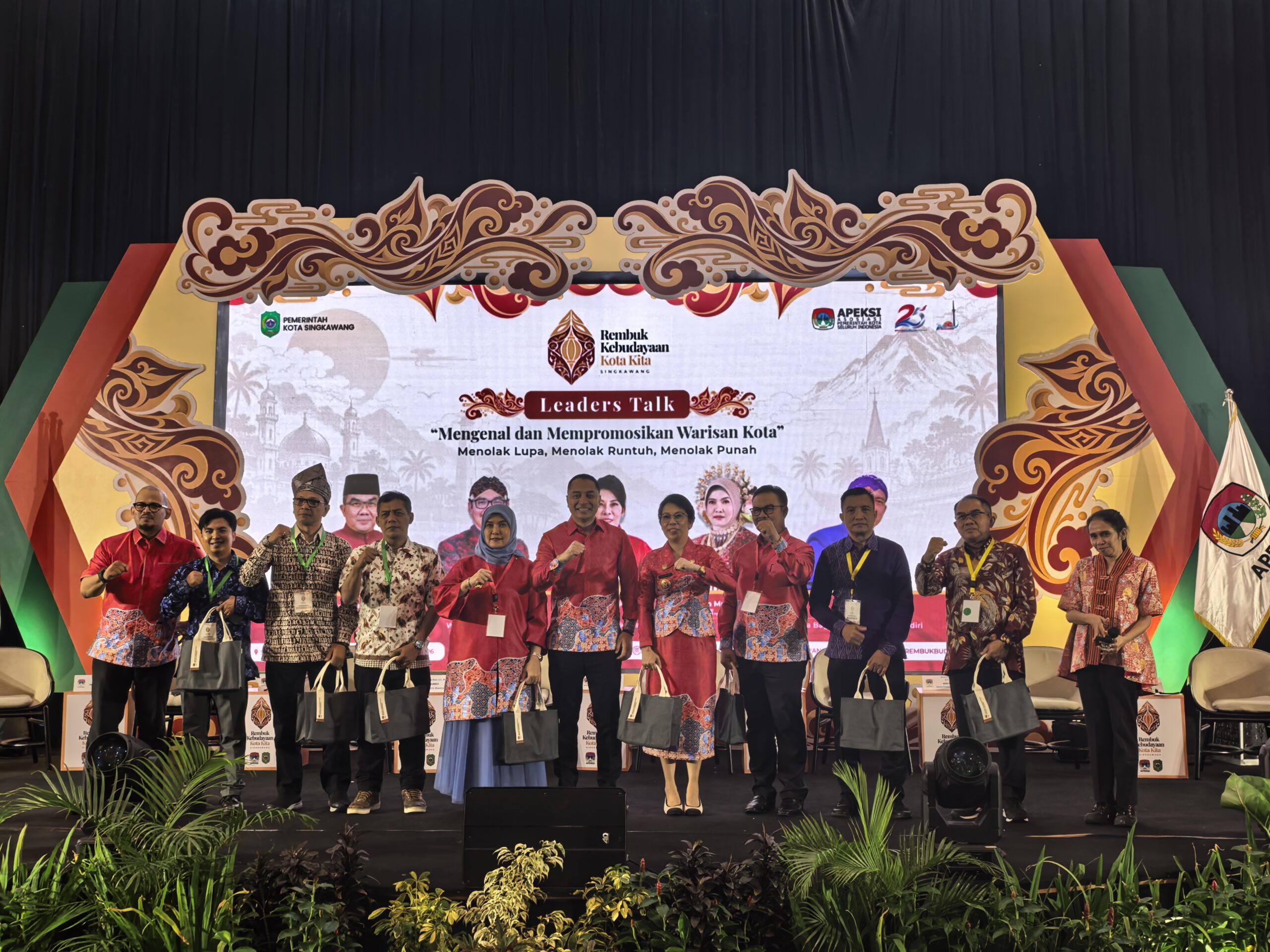
Singkawang – APEKSI, in collaboration with the Singkawang City Government, hosted a series of discussions titled Our City’s Cultural Deliberations (Rembuk Kebudayaan Kota Kita) in Singkawang from October 15–17, 2026. Centered on the theme “Recognizing and Promoting Urban Heritage: Resisting Oblivion, Decay, and Extinction,” the forum was officially opened by West Kalimantan Deputy Governor Krisantus Kurniawan. It brought together municipal government delegations from across Indonesia—from Sabang to Merauke and from Banda Aceh to Jayapura. The event served as a strategic platform to reaffirm that culture is not merely a relic of the past, but a foundation for societal resilience and a driving force for the urban creative economy.
Leading up to the main deliberations, APEKSI organized a series of participatory activities focused on inter-city collaboration and engaging the younger generation. A “Cultural Coordination Forum” brought together representatives from various local governments to map out cultural ecosystems and align cultural advancement with city branding strategies. Meanwhile, the younger generation had space to express themselves through the “APEKSI Youth: Our City, Our Stories” (*APEKSI Muda: Cerita Kota Cerita Kita*) program. This included a “Participatory Urban Storytelling” workshop, a “Youth Walking Tour” exploring the diverse heritage of Singkawang—such as the Grand Mosque, local *viharas* (Buddhist temples), and the Tjia Clan House—as well as a “Cultural Photography Exhibition” showcasing the visual identities of cities across Indonesia.
The gathering culminated in a strengthened commitment among cities to advance culture through concrete actions integrated into development planning. The Chairman of the APEKSI Executive Board—who also serves as the Mayor of Surabaya—Eri Cahyadi, alongside the Mayor of Singkawang, Tjhai Chui Mie, emphasized that culture is a unifying force and an economic driver, representing a long-term investment that shapes a society’s character. Guided by the Minister of Culture, Fadli Zon, and the Deputy Minister of Creative Economy, Irene Umar, this forum fosters synergy to ensure that the richness of local values can be leveraged into economic added value—fair to the community—without eroding its original cultural roots.