
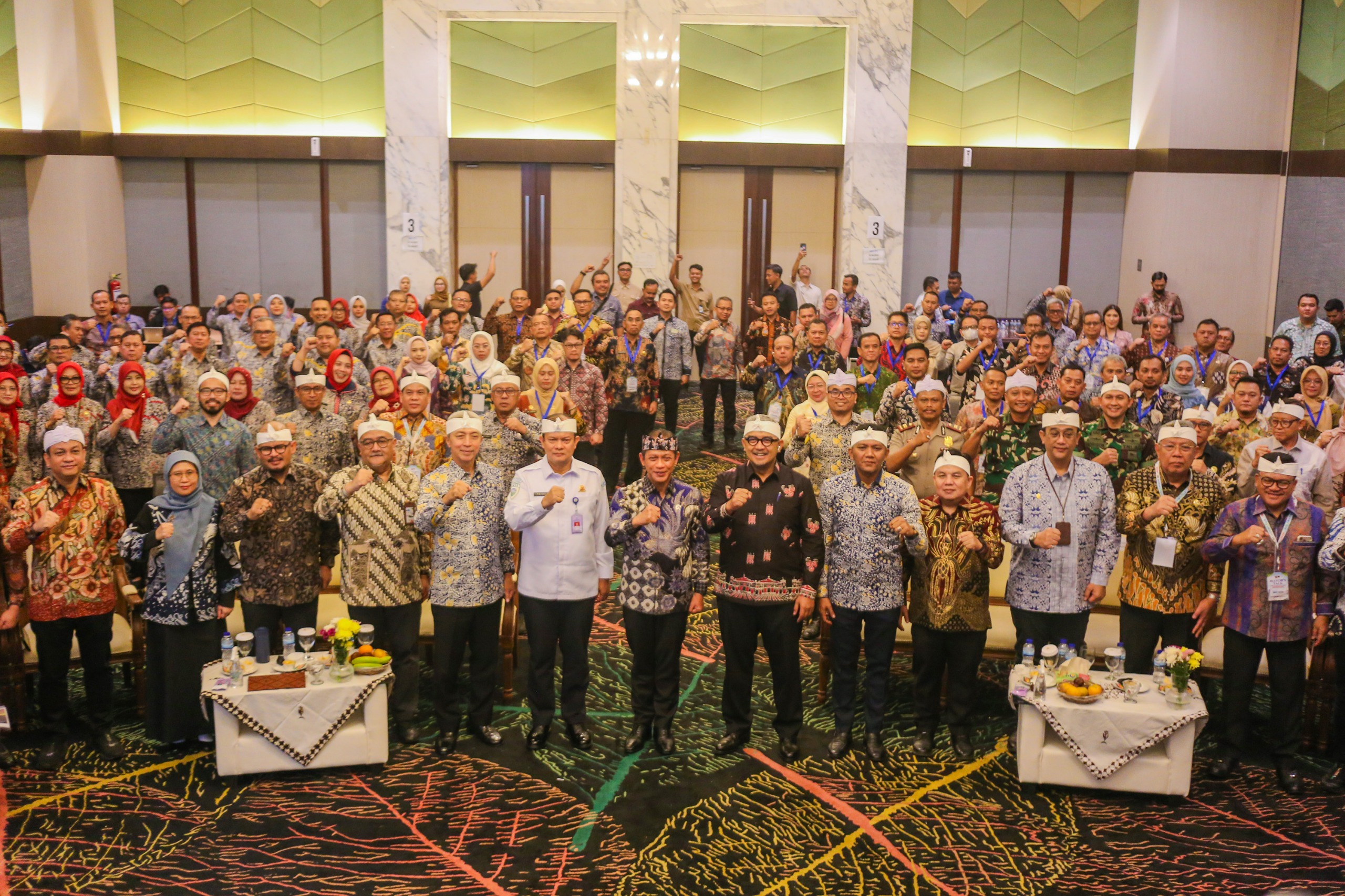
Twenty-five mayors and municipal government delegations from the APEKSI Regional Commissariat III (Komwil III) gathered in Bogor City on September 28–29, 2026, for the 45th APEKSI Mayors Talk: Climate and Urban Resilience. Held at Bogor City Hall and the IPB International Convention Center, this strategic forum focused on strengthening urban resilience in the face of global climate change and extreme weather phenomena such as El Niño and La Niña. Bogor Mayor Dedie A. Rachim, as host, emphasized that amid fiscal dynamics and regional budget constraints, inter-city synergy is essential to restore and reinforce cities’ status of cities as resilient urban centers.
The forum also focused on transforming waste management systems from upstream to downstream. Bogor City shared best practices ranging from the transition to controlled landfills and the integration of digital waste stations to the acceleration of Waste-to-Energy (PSEL) projects. The event also opened opportunities for collaboration with the younger generation and circular economy stakeholders, encouraging them to become active agents of mitigatg environmental disasters. From a leadership perspective, the Chair of APEKSI Komwil III—who is also the Mayor of Pekalongan, Achmad Afzan Arslan Djunaid—reminded participants that the foundation of urban resilience lies in the integrity of policymakers as they devise breakthroughs amidst budgetary challenges.
As a key outcome, the meeting produced the “Bogor Communiqué 2026,” a document containing recommendations and strategic policy proposals to be submitted to relevant national ministries. APEKSI Executive Director Alwis Rustam stated that the forum served not merely as a platform for exchanging experiences (horizontal learning), but also as a vehicle for regional advocacy to champion solutions regarding Transfers to Regions (TKD) and green infrastructure. The Indonesian Deputy Coordinating Minister for Food, Hanif Faisol Nurofiq, also commended this shared commitment as aligned with efforts to maintain environmental stability and national food security.