
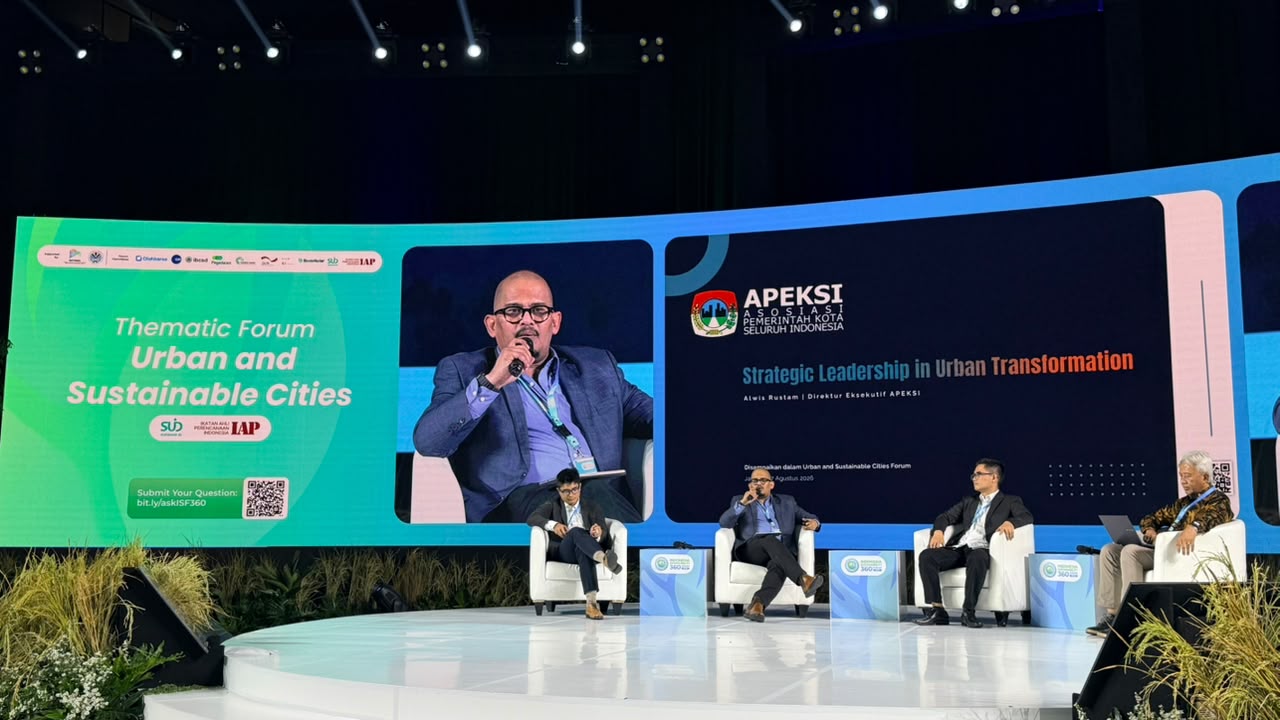
Have we ever felt stifled by traffic jams, the increasingly hot weather, or the anxiety every time heavy rain falls in the city? These typical everyday problems are what made the Urban and Sustainable Cities Thematic Forum on August 26-27, 2026, feel so relevant and close to us. Held at the SMESCO Convention Hall, Jakarta, as part of the Indonesia Sustainability 360 Forum, this event was far from rigid. Here, various parties sat together to seek real solutions so that the cities where we earn our living can grow into environmentally friendly spaces, resilient to the climate crisis, and most importantly, comfortable for their residents to live in again.
Amidst the heated discussion, one moment brought a glimmer of new hope: the launch of the Sustainable Urban Development Insight Report 2026. Compiled through close collaboration with SURBAND ID and IAP Indonesia, this report is like a compass or recipe book for anyone looking to design the city of the future. Rather than just a series of complicated theories or statistics, this document offers very down-to-earth solutions. The hope is that spatial planners and policymakers will have clear guidance for transforming rigid and polluted infrastructure into warm, low-carbon, and vibrant spaces for interaction.
Of course, even the best plans require dedicated people to realize them. The forum (August 26th) was brought to life by conversations with figures who deeply understand the pulse of our cities. These included experts like Bambang Susantono (Dean of the Cities and Local Government Institute Asia Pacific) and Alwis Rustam (Executive Director of APEKSI), as well as voices from community leaders and innovators like Elisa Sutanudjaja (Rujak Center for Urban Studies), Purnomo Dwi Sasongko (iKUPI), and Robin Renardi Yovianto (CEO of AMODA). Listening to their exchange of ideas reminded us of one fundamental principle: healing a city ailing from urbanization cannot be left solely to the government. It requires the care and cooperation of all of us to build a city that truly humanizes its people.