
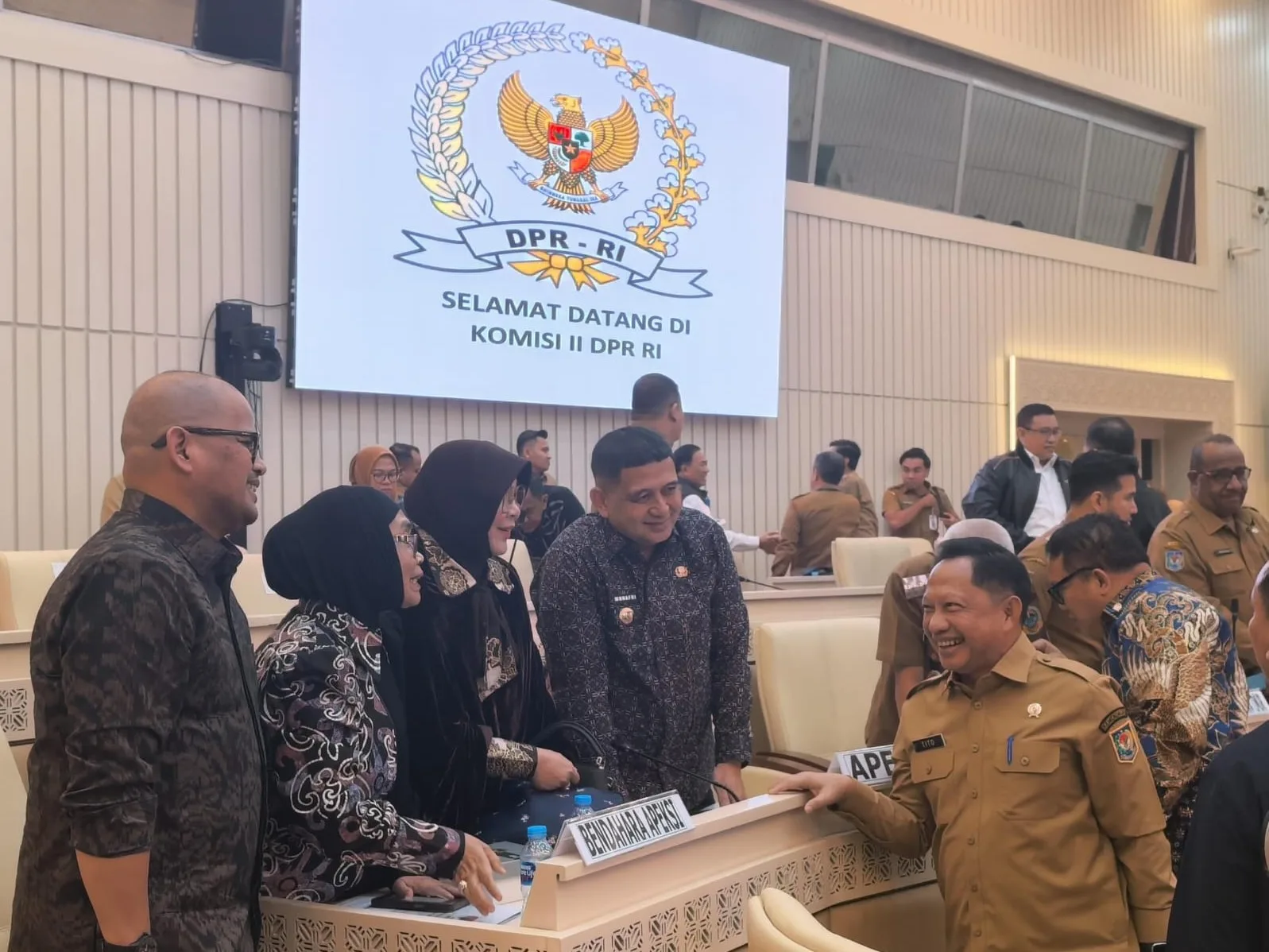
APEKSI attended the Working Meeting/General Public Hearing/Regional Budget Meeting (Raker/RDPU/RDP) with Commission II of the Indonesian House of Representatives (DPR RI), which was also attended by the Minister of Home Affairs and the Minister of Administrative and Bureaucratic Reform (PANRB), on June 8, 2026. The presence of APEKSI and other regional government associations aimed to provide important notes and strategic recommendations regarding financial and apparatus governance in the regions. One crucial point discussed was the 30% maximum employee spending limit mandated by the HKPD Law. APEKSI encouraged a transition period and regulatory adjustments to ensure this policy does not strain the fiscal space of city governments in Indonesia.
During the meeting, a joint commitment was formulated to protect the well-being of local workers. The recommendation emphasized that Government Employees with Work Agreements (PPPK) and Part-Time PPPK appointed through the non-ASN workforce restructuring policy may not be unilaterally dismissed due to regional fiscal constraints or strict regulations regarding maximum employee spending limits. This step is a breath of fresh air for staffing stability at the city level, while also ensuring the continuity of public services currently supported by non-ASN personnel.
In addition to protecting tenure, the recommendations from this meeting also encourage financing reforms to avoid a sustained burden on regional budgets. APEKSI, along with Commission II of the Indonesian House of Representatives (DPR RI), urged the Ministry of Home Affairs and the Ministry of Administrative and Bureaucratic Reform (PANRB) to coordinate with relevant ministries so that funding for regional PPPK (Employee Employment Recipients)—particularly for Health Workers, Teachers, and Education Personnel—can be diverted or funded directly through the state budget. This synergy between the central and regional governments is expected to ensure the welfare of civil servants (ASN) while maintaining a healthy regional budget structure across all cities.