
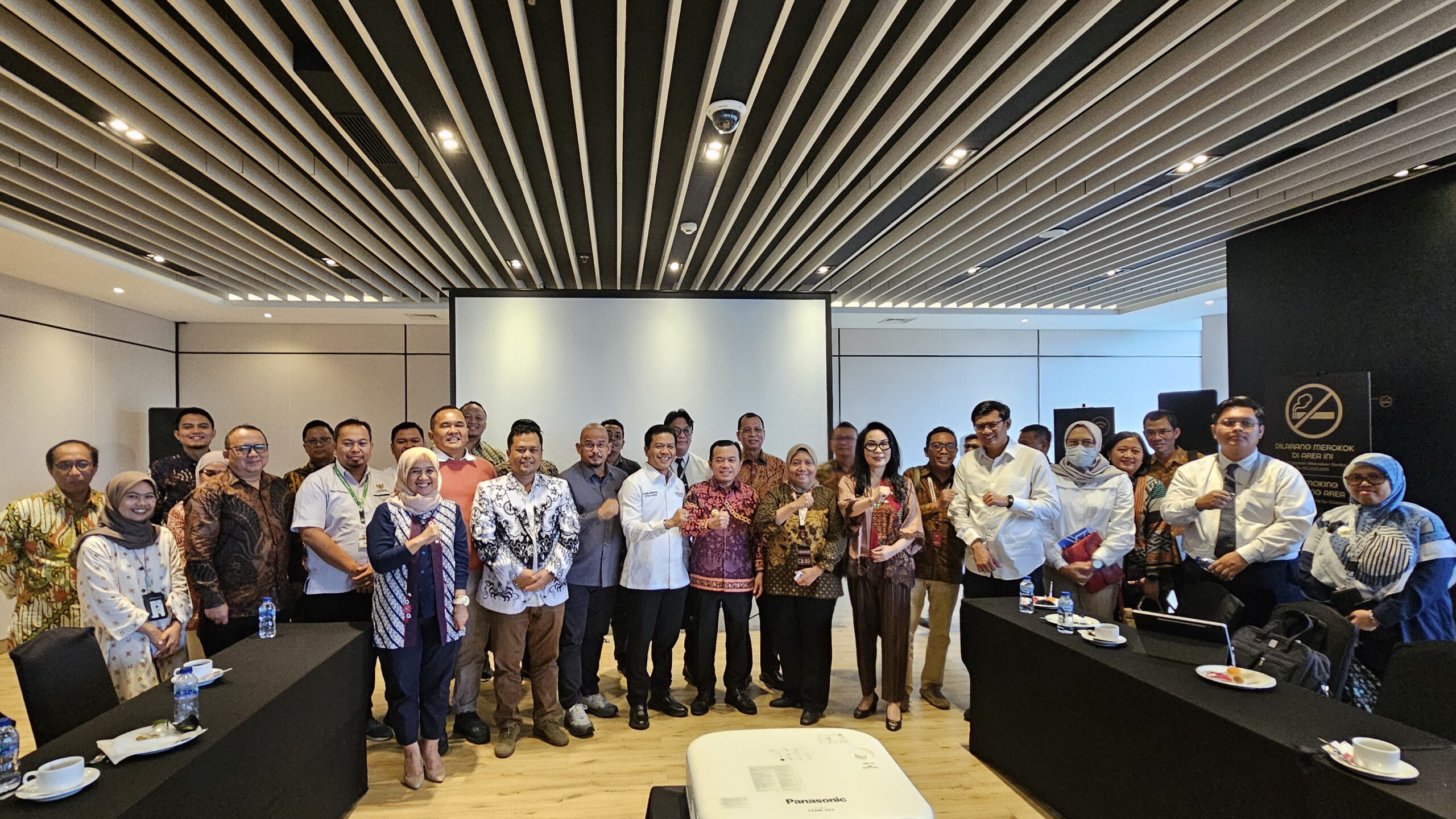
APEKSI participated in the Coordination Meeting of the Working Group on Cooperation and Increasing Non-Governmental Participation, held as a follow-up to Presidential Instruction (Inpres) Number 8 of 2025 concerning Optimizing the Implementation of Poverty Alleviation and the Elimination of Extreme Poverty on 30 September 2025.
This meeting provided a forum for synergy between the central and regional governments, and non-governmental organizations to strengthen the implementation of targeted and sustainable poverty alleviation policies. APEKSI Executive Director, Alwis Rustam, provided several strategic inputs regarding the challenges of policy coordination and implementation at the city level, such as the Synchronization and Access to DTSEN Data. APEKSI emphasized the importance of data alignment between the central, provincial, and district/city governments. Referring to Presidential Instruction No. 4 of 2025 concerning the National Socio-Economic Single Data (DTSEN), APEKSI highlighted the key issue of data accessibility. Currently, many local governments still struggle to access data managed by Bappenas, even though this data is crucial for the preparation of strategic documents such as the RPJMD (Regional Medium-Term Development Plan). APEKSI also emphasized the importance of clarity in the outputs of each established Working Group (Pokja), as well as the need for a more measurable coordination pattern. Each Working Group is expected to have specific and measurable targets per semester and to report results and activity realization regularly. This will strengthen accountability and ensure consistent policy follow-up between the central and regional governments. Another issue of concern for APEKSI is fiscal inequality between regions, particularly regarding Revenue Sharing Funds (DBH). In the context of implementing Presidential Instruction No. 8 of 2025, APEKSI emphasized the importance of active participation by local governments, along with non-governmental sectors such as the business world, philanthropy, universities, and civil society organizations. This collaboration is expected to strengthen the implementation of programs such as People’s Schools, job skills training, and support for MSMEs and vulnerable groups to become more productive and competitive.
In general, APEKSI encourages continued coordination meetings across ministries and regions with concrete follow-up, both in terms of data governance and fiscal management. With open data access, effective coordination, and equitable fiscal support, the national target of 0% extreme poverty by 2026 and reducing the poverty rate to 5% by 2029 will be more easily achieved.