
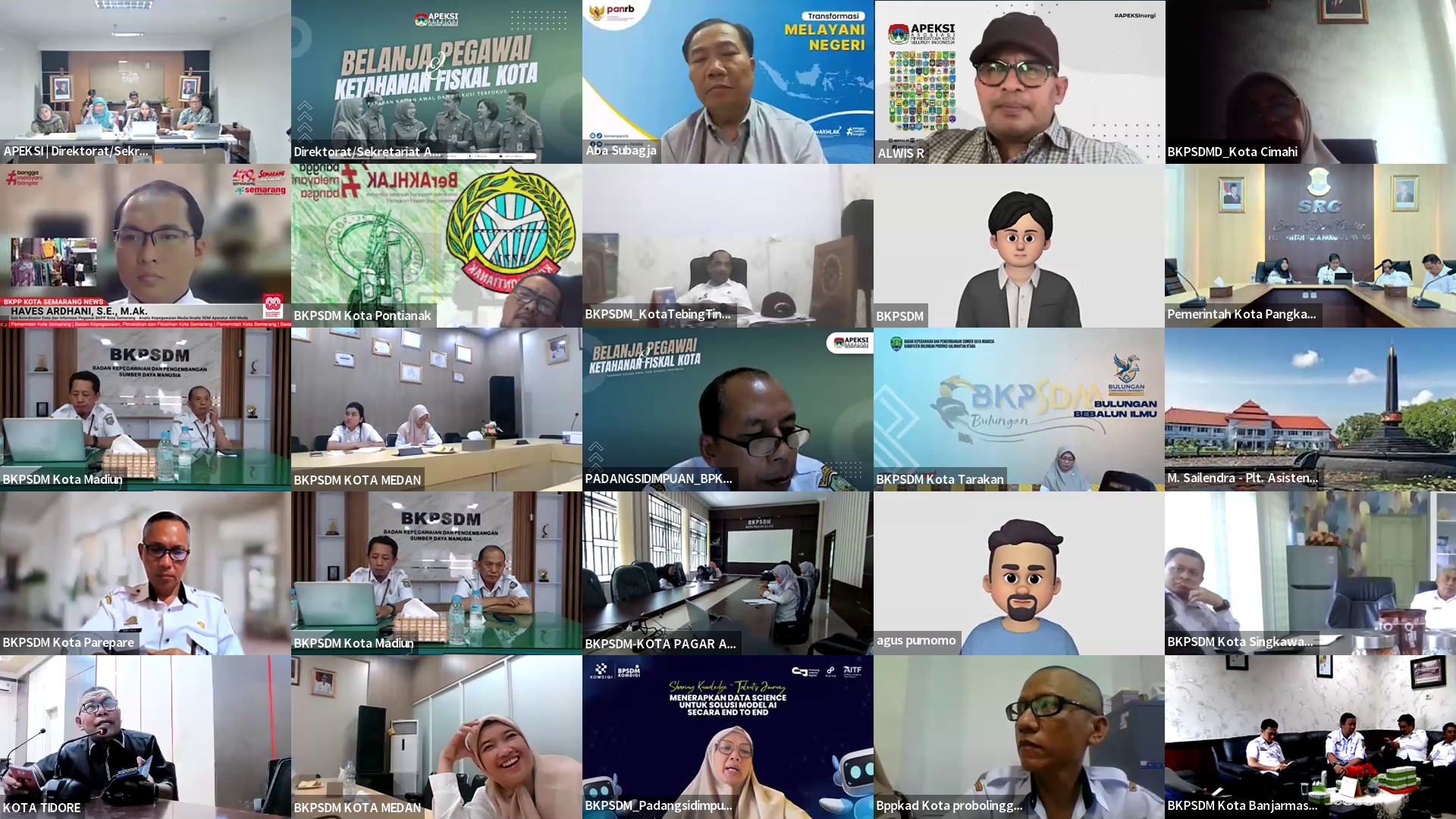
The latest APEKSI study reveals the increasingly alarming fiscal conditions of Indonesian cities, with the average employee spending ratio soaring from 40.28% in 2024 to 43.64% in 2025. This “red light” phenomenon has placed 82.80% of cities in the critical quadrant due to ballooning employee spending disproportionate to low Regional Original Revenue (PAD). This surge was triggered by central government policies regarding the massive recruitment of Government Employees with Work Agreements (PPPK) and the shift in honorarium spending codes, which administratively directly restrict regional budget flexibility for infrastructure development and other public services.
Facing this pressure, city governments, through APEKSI, are proposing that the central government provide relaxation in the form of a more realistic clustering of employee spending limits, at 40-45% for regions with limited fiscal capacity. Without a transitional policy or greater transfer support for salaries, regions are forced to take drastic measures, such as recruitment moratoriums and streamlining employee benefits, to maintain regional budget stability. Policy synergy between the central and regional governments is key to ensuring that the mandate of the Law on Financial Relations between the Central and Regional Governments (HKPD Law) does not cripple the city’s future economic independence.