
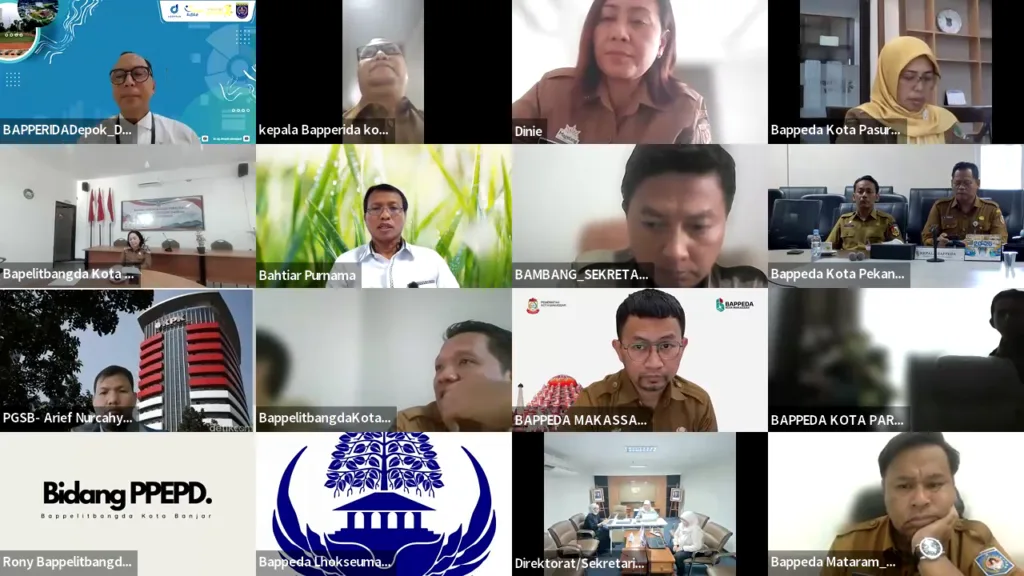
APEKSI is taking proactive steps to protect regional governance from corruption by promoting the latest system implemented by the Corruption Eradication Commission (KPK RI), the MCSP (Monitoring, Controlling, Surveillance for Prevention). Unlike the previous system, which tended to be administrative, the MCSP, launched in 2025, emphasizes direct control and stricter field supervision. This was achieved through an online discussion held on Monday, February 2, 2026.
The main focus of this strategic meeting was strengthening control functions in eight corruption-prone areas: planning, budgeting, procurement of goods and services, civil servant management, asset management, strengthening the Public Service Authority (APIP), public services, and the tax sector. Considering that planning is the “upstream” of all government processes, the Heads of Regional Development Planning Agencies (Bappeda), Regional Development Planning Agency (Bappelitbangda), and Regional Development Planning Agency (Bapperida) throughout Indonesia are required to understand detailed field-based indicators to ensure that corruption opportunities can be effectively addressed from the document drafting stage. This step is crucial to ensuring that the Regional Work Plan (RKPD) and Regional Medium-Term Development Plan (RPJMD) are not only sound on paper but also accountable in their implementation.
This interactive discussion featured the Director of Coordination and Supervision for Region II of the Corruption Eradication Commission (KPK) as the main resource person on corruption risk mitigation strategies. In addition to serving as an educational platform, the event aimed to produce concrete guidelines for work and strengthen the commitment of the APEKSI (Head of Bappeda) Bakti Forum to integrated planning and data transparency. With strong synergy between city governments and the KPK, it is hoped that new, more comprehensive oversight standards will be created to achieve corruption-free cities in Indonesia.