
An opinion article from the daily Kompas, Friday, January 2, 2026 edition
By:
Alwis Rustam
Board Secretary/Executive Director of APEKSI (Association of Indonesia Municipalities)
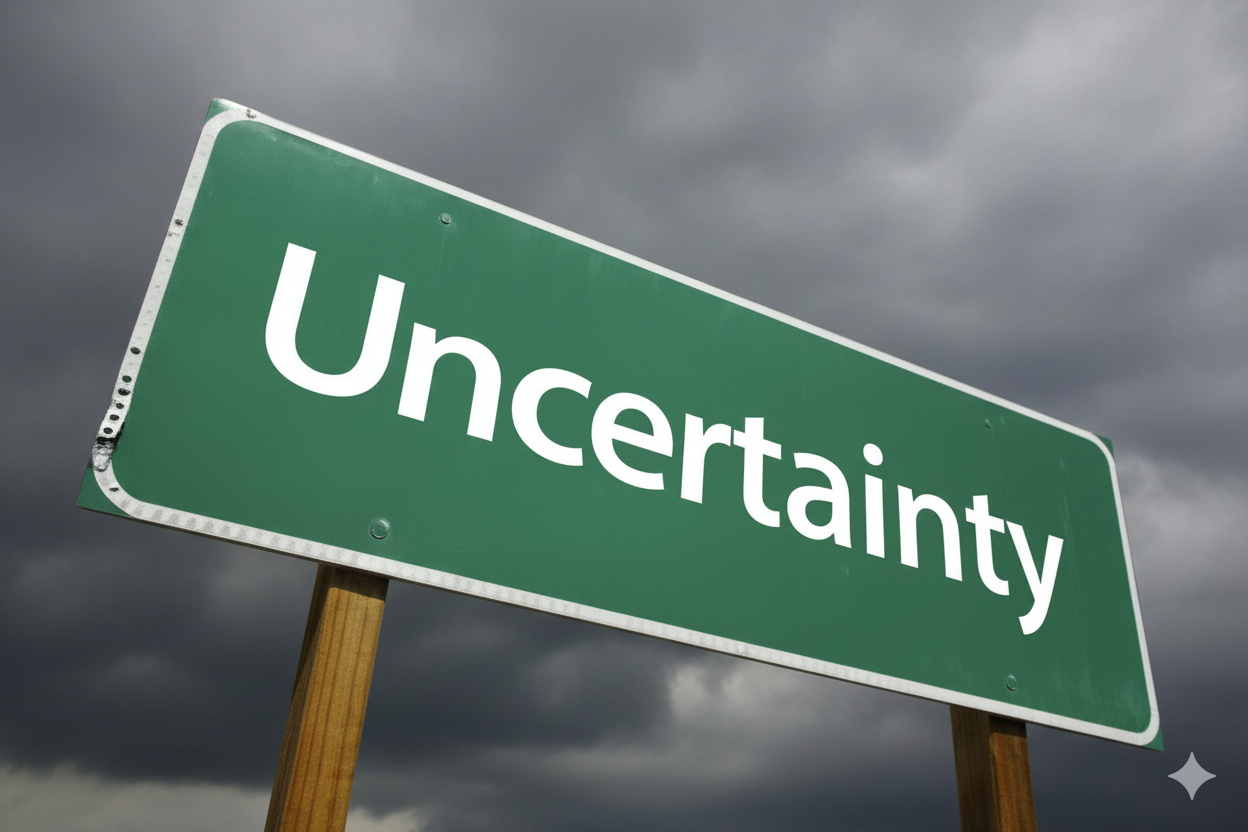
As they welcome the sun of 2026, Indonesian cities remain on high alert. Fiscal pressures are neither light nor simple; they are deeply dilemmatic. Policy directions shift frequently. Climate risks are becoming increasingly tangible. However, the primary issue facing cities is not merely budget constraints or a “tsunami” of regulations. The most significant problem is uncertainty.
Cities are forced to work within an ever-shrinking space, while simultaneously being expected to remain adaptive and innovative. This is a paradox that city development administrators feel more acutely day by day.
The terrain they traverse is unstable, rife with political intrigue and weakened law enforcement. Demands for public services are rising. Disasters occur more frequently. Socio-economic dynamics move rapidly. Yet, at the same time, the policy space for cities is becoming more restricted. Cities are asked to execute, but are rarely involved in determining the direction.
The fundamental issue lies in perspective. Cities are still frequently treated as objects of policy, rather than subjects of development. Many national policies are formulated with a uniform logic, as if all cities possess the same capacity, character, and challenges.
A small coastal city is governed by the same rules and regulations as a large service-and-industry-based metropolis. Island cities are treated the same as those with strong fiscal standing. Resource-constrained cities are forced to meet the same standards as established ones. This “one-size-fits-all” approach may look neat on paper, but it is fragile in the field. It ignores data and local context, narrows the room for innovation, and distances policy from the actual needs of diverse citizens.
In reality, urban development is more than just a series of indicators and performance reports. It manifests in clean water that must actually flow at all times, humane and well-maintained transportation, properly managed industrial and domestic waste, decent living spaces, healthy socio-cultural interactions, and the safety of the residents. When policy is not grounded in reality, those who bear the impact first are not the policymakers, but the citizens in their daily lives.
Another issue rarely discussed honestly is policy inconsistency. Shifts in direction, delays, and even the termination of strategic projects are often dismissed as the natural “dynamics” of governance. But for a city, this is more than just a dynamic. The impact is long-term and real.
Many cities have moved to organise their spaces according to the central government scenarios. Several cities have contributed by preparing territories, supporting facilities, managing social impact mitigation, and aligning medium- and long-term plans. When a project suddenly halts midway to be replaced by a new national priority, the promised public benefits evaporate. Ironically, the environmental, social, and spatial burdens remain with the citizens, along with all the consequences.
In such situations, the city bears the risk of decisions that are not entirely within its control. These risks are rarely factored into joint policy calculations, let alone evaluations. Changes in course are often abrupt. Meanwhile, technocratic-scientific arguments are easily ignored, replaced by the dominance of political-populist impulses.
When cities voice this anxiety, the response is often an accusation of “complaining.” Yet, what is being expressed is not a request for special privileges. What is being demanded is something rational: certainty of direction, consistency of policy, and recognition of diverse contexts. Cities do not reject national policy; they only ask to be invited to think and decide together.
Indeed, within a narrow fiscal space, some cities are struggling to demonstrate resilience. Throughout 2025, cities supported and learned from one another. Only 16 out of 98 cities in Indonesia (based on 2025 data) possess “Strong Fiscal Capacity” (independent).
While most other cities remain heavily dependent on central transfers, some have maintained consistent growth in Regional Original Income (PAD). There are also small cities—”small but mighty”—that, despite stumbling, have managed to achieve leaps in income while keeping inflation under control.
Today, many cities increasingly realize the importance of standing shoulder-to-shoulder to face disasters, learning from each other to strengthen public services, and sharing best practices. The digitalization system in Malang City, for example, is already being used in other cities outside Java, avoiding the waste of creating new systems. Similarly, the poverty data system platform owned by Surabaya is being used in cooperation with other cities interested in replicating its success. When vertical coordination falters, horizontal cooperation persists. Cities are not passive; they adapt.
Togetherness and solidarity are felt most strongly when nature provides warnings that cannot be ignored. The series of disasters at the end of this year highlighted the high cost of development that ignores environmental carrying capacity. Once again, urban residents are the first victims of the impact. If this pattern of development is maintained, cities will lose not only space but also their vitality.
Looking toward 2026, the challenges for cities will not diminish. Fiscal pressure continues. Climate risks are rising. Citizen needs are increasing. The question is no longer whether the city can survive, but how much longer a city can be forced to survive amidst uncertainty.
The Foundation of Development
The experience of 2025 shows one important thing: cities always find a way to innovate. However, that resilience is not infinite. Solid national development is not born from uniform policies or the rhetoric of collaboration; it is born from certainty of direction, consistency of policy, and the courage to share power. Regional autonomy is the foundation of development; it should not be seen as an obstacle. As long as the city is treated as an executor rather than an equal partner, development may continue, but it will be very fragile.
In the future, those in power do not need new jargon to ensure the welfare of citizens. Most importantly, avoid the simplification of problems, especially regarding diverse urban issues. Cities need certainty and consistency. Let us not allow our cities in 2026 to be gripped by a recurring sense of hesitancy.